

Shavkapito: The Native Red Grape Variety of Kartli
S h a v k a p i t o : T h e N a t i v e R e d G r a p e V a r i e t y o f K a r t l i
Author: Levan Sepiskveradze | Originally published on Wine Club
Shavkapito — also called Shavi Kapito by locals in the Liakhvi Valley — is an indigenous red grape variety of Kartli, Georgia. You can find Shavkapito across almost every district of Inner Kartli, including regions where winemaking has historically been less developed.
This variety particularly thrives in the districts of Gori and Kaspi, as well as in the villages surrounding Tskhinvali. In the upper reaches of the Greater Liakhvi Valley (historical Samachablo), Shavkapito was mainly cultivated on the plains. Interestingly, despite local farmers traditionally avoiding planting red grape vines as household arbors (due to practicality), Shavkapito arbors were once a common sight in home gardens throughout the Liakhvi Valley. Sadly, the vast majority of these vineyards were destroyed after the 2008 war.
According to Georgian ampelographers, Shavkapito grapes can produce high-quality wines. Villages like Kvemo Achabeti, Kurta, Didi Dzartsemi, Beruli, and others are especially notable for this variety. In Soviet times, Shavkapito harvested from these areas was used not only for table wine but also for producing sparkling wine. However, due to its limited cultivation area, there was little research during the Soviet era on Shavkapito’s storage potential or durability during transport. Local farmers say this wine must be handled very delicately during transportation, and the grapes themselves do not store for long.
Shavkapito was once widespread in both the Greater and Lesser Liakhvi Valleys. Nearly every family grew at least one Shavkapito vine as an arbor. In the Lesser Liakhvi Valley, vineyards were usually planted on slopes to the left of the river, while in the Greater Liakhvi Valley they were closer to forested areas. Shavkapito was often pressed together with Tavkveri grapes, but my father believed that pure Shavkapito made even better wine. We listened to him a few times and pressed Shavkapito separately — the wine turned out wonderful those years. In the Liakhvi Valley, winter arrives early, so grape varieties grown there had to be hardy and early-ripening. Shavkapito is highly frost-resistant and was cultivated in nearly every Georgian village around Tskhinvali. Unfortunately, in recent years, few people have preserved qvevri (traditional Georgian clay vessels for winemaking). Most wine was made and stored in barrels or glass containers instead. In the Liakhvi Valley, wine was rarely sold — every household produced enough for their own use throughout the year. That’s how it was, even just five years ago… and we all know what happened since.
Mevlud Kristsesiashvili, displaced from Samachablo
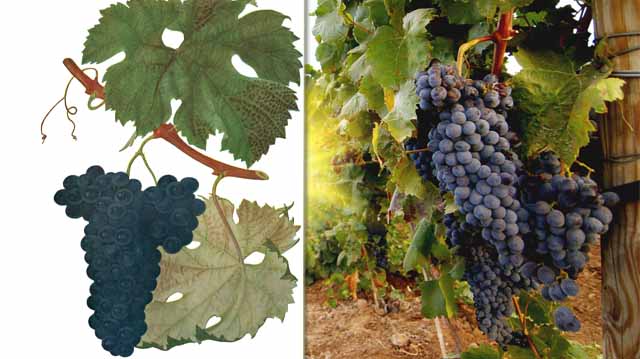
It’s worth mentioning that in the last century, the ampelographer S. Shaverdov classified Shavkapito within the Kakhetian group of endemic vines. He and scientist A. Firalov had only limited data about this variety but agreed that botanically, Shavkapito resembles Kakhetian grape varieties more than Kartlian ones. This view is debatable, as today Shavkapito is almost entirely absent from Kakheti apart from a few isolated vines. Renowned ampelographer N. Chakhnashvili, however, firmly believes in Shavkapito’s Kartlian origin and considers it one of the oldest grape varieties of Kartli. He supports this with details about the leaf shape, hairiness, cluster and berry form, and other characteristics.
Valeri Rcheulishvili, a small winery owner, has vineyards in the village of Kveshi in the Gori district of Inner Kartli. His vineyards cover about one hectare, where he grows small amounts of Shavkapito alongside other Kartlian varieties. Because Shavkapito makes up only about 0.05 hectares of his vineyard, Valeri has long pressed it together with Tavkveri. This year, he plans to expand his Shavkapito cultivation and will plant new vines this summer.
According to a statistical survey conducted in 1953, Shavkapito covered only about 40 hectares across all of Georgia — a very small area. Most of this was located in the former South Ossetia region, especially in the Znauri (Kornisi) district, where about 12 hectares were planted. In Tskhinvali, Akhalgori, Kareli, Kaspi, and Khashuri districts, Shavkapito vineyards did not exceed 3–4 hectares each. As of January 1955, Inner Kartli had 44.7 hectares of Shavkapito vineyards. A plan was in place at that time to expand its cultivation in villages of the Tskhinvali district, which was indeed carried out in the 1960s. However, there is no precise data on how much vineyard area existed in the Greater Liakhvi or Prone Valleys during the 1970s–80s.
I have a small Shavkapito vineyard on a slope in Kveshi. In our zone, the Mejuda River Gorge, Shavkapito is now very rare. In my vineyard, it makes up less than 0.05 hectares. So when I harvest, I ferment it together with Tavkveri. Unfortunately, I haven’t yet vinified Tavkveri separately, but I plan to do so soon. I’m currently bringing new Shavkapito seedlings from the nursery and want to cultivate enough to make wine from this variety on its own. Around here, few people still have Shavkapito, so its wine is considered a real rarity. I have tasted it a few times from local farmers, but I can’t say for sure whether those wines were pure Shavkapito. Once I expand my vineyard, I plan to make the wine exclusively in qvevri. I believe qvevri is the best vessel for winemaking, and every Georgian winemaker should treasure it. Despite the challenges, winemaking in Kartli has made great progress in recent years. Winemakers in Ateni, for example, have adapted well to modern methods. Soon we plan to establish the Kartli Winemakers Association to unite those who produce quality wine. With German support, a new project is promoting cooperatives and organic winemaking. We’ve already founded the first cooperative and are spreading information about “bio” wine. I hope things continue to improve.
Valeri Rcheulishvili, winegrower
Today, only two Georgian wine companies bottle Shavkapito commercially: Chateau Mukhrani and Tears of the Pheasant. Both maintain vineyards near the village of Mukhrani in the Mtskheta district. One of the winemakers at Tears of the Pheasant, Malkhaz Fatalashvili, shared that their company bottles only about 4,000–5,000 bottles of Shavkapito annually, limited by vineyard size.
We grow Shavkapito and Tavkveri in the same vineyard. Unfortunately, we don’t yet have separate Tavkveri vineyards, but that day will come. It’s hard to calculate the exact area, but we produce about 4,000–5,000 bottles annually. Our vineyards are near Mukhrani, and this micro-zone is ideal for Shavkapito. Everyone who tries this wine for the first time loves it — Georgian wine lovers are very fond of Shavkapito. The problem is that many people don’t even know this variety exists, which is a major issue in itself. Our wine price depends on the vintage’s quality and quantity. On average, a bottle of Tears of the Pheasant Shavkapito costs about 30 GEL — which is not much for such a rare variety. We vinify it in qvevri, which consumers really appreciate. Wines from old Georgian varieties made in qvevri gain unique taste qualities. Tavkveri is one of Kartli’s oldest and most unique varieties — arguably one of Georgia’s top grapes in terms of quality. The main challenge is the limited vineyard area, but we hope this will change for the better.
Malkhaz Fatalashvili, winemaker at Tears of the Pheasant
As Georgian winemakers point out, just like other native varieties, Shavkapito’s main challenge today is its tiny cultivation area. Compounding this is the fact that in some parts of Kartli, locals see no big difference between Shavkapito and Tavkveri, often blending them, which makes it harder to appreciate Shavkapito’s unique character. Despite these challenges, Shavkapito is slowly but steadily reclaiming its reputation and rightful place — and there’s no doubt it will continue to do so!

Mikheil Tlashadze
The author is passionate about Georgia’s wine heritage, focusing on unique regions like the Ateni Specific Viticulture Area. Their work highlights the distinct character of Kartli’s terroir and traditions.