

Geographical Location
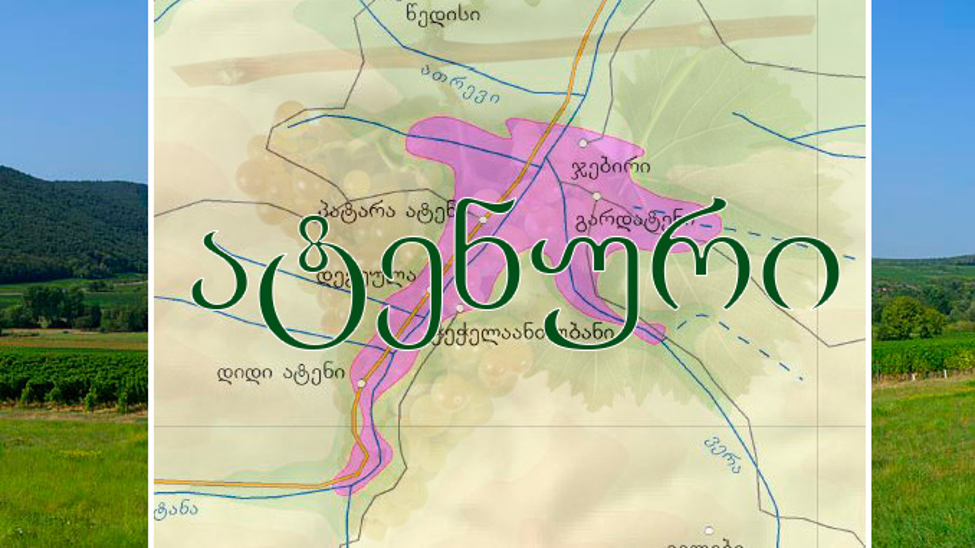
Ateni (Atenuri) is located in Inner Kartli, Gori Municipality, on the northeastern slopes of the Trialeti Range, within a hilly foothill zone. The exact coordinates are 42°31′ N latitude and 42°54′ E longitude. The vineyards of Ateni are situated on both sides of the Atenis River and form slopes with northeastern, southern, and southwestern inclinations. The elevation of the vineyards ranges from 620 to 750 meters above sea level and includes the villages of Patara Ateni, Gardateni, and Didi Ateni.
Climate
The Ateni zone belongs to a moderately humid subtropical climatic region — characterized by hot summers and cold winters.
Sunshine duration: 2,200–2,300 hours per year; during the growing season — 1,500–1,700 hours
Average annual temperature: 10.7 °C
Average August temperature: 22 °C
Average January temperature: -1.5 °C
Sum of active temperatures: ~3450 °C
Vegetation period: on average 192 days (from mid-April to the end of October)
Hail occurs on average twice a year, most frequently in May.
Precipitation
South of Gori, in the Tana River gorge, precipitation decreases with elevation. In Ateni (620 m above sea level), the annual amount is about 560 mm.
The wettest month is May (73 mm),
The driest is August (32 mm).
Only 344 mm falls during the warm season, requiring intensive irrigation of vineyards, especially in July and August.
Winds
Winds mainly blow from the northwest and southeast. However, the Tana River gorge is protected from strong winds by the Trialeti and Satskhenisi-Tsereti ridges. Wind strength diminishes along the gorge axis and becomes even weaker inside it.
Frost
Minimum air temperatures are lower than coastal areas — down to -12 to -14°C, and in some years as low as -17 to -19°C, which may damage annual shoots.
Soils
There are two main soil types in the Ateni zone: brown and alluvial soils. In smaller areas, diluvial and proluvial soils also occur.
Soil depth: 0.7–1.5 m
Humus layer: 30–60 cm
Texture: heavy and light clay; clay content 40–70%
pH: 7.2–8.2 (slightly to moderately alkaline)
Humus: 0.5–3.25%
Nitrogen: 6–10 mg per 100 g of soil
Phosphorus: 1.2–6 mg per 100 g
Potassium: 9.2–46 mg per 100 g
Recommended Varieties and Agrotechnology

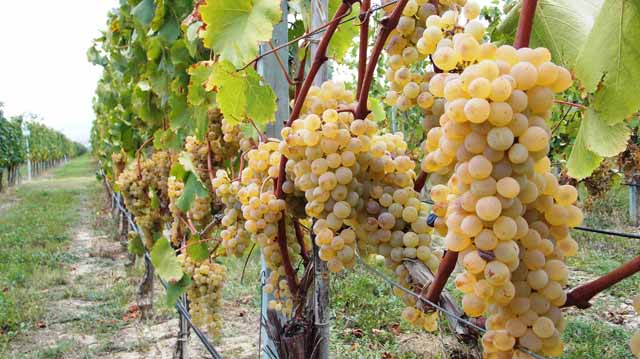
Chinuri
Elevation: 640–830 m Planting scheme: 2.5x1.5 or 2.0x1.5 m Trunk height: 90–100 cm Pruning system: Georgian double curtain or free form Yield: 8–9 t/ha
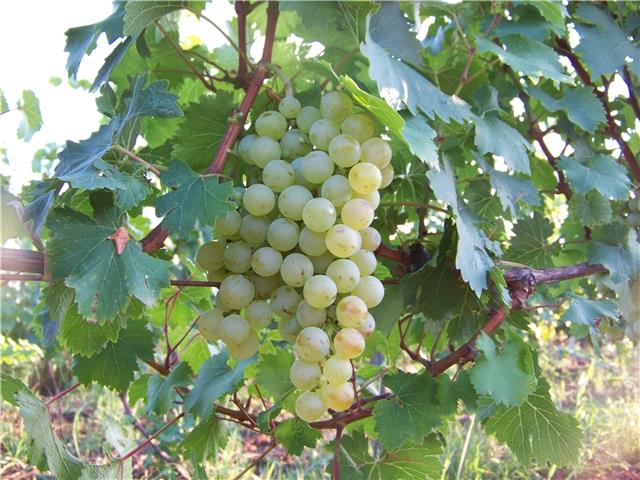
Goruli Mtsvane
Elevation: 640–830 m Planting, trunk height: same as above Yield: 8 t/ha
Aligoté
Elevation: 640–850 m Planting scheme: same Yield: 8 t/ha

Soil Management and Fertilization
Autumn and spring plowing
End irrigation one month before harvest
Keep soil loose in non-irrigated areas
Apply organic and mineral fertilizers as per regulations
Pests and Diseases & Protection Measures
Main diseases: powdery mildew, downy mildew
Pests: vine scale insects, grape berry moth
Protection: Use of registered pesticides and treatments
Chemical Requirements for "Ateni" (or "Atenuri") Wine
Alcohol content: 11.5%
Sugar concentration:
Extra dry: max 3.0 g/dm³
Dry: 20–35 g/dm³
Semi-dry: 35–50 g/dm³
Semi-sweet: 50–80 g/dm³
Sweet: 80 g/dm³ or more
Titratable acidity: 6.0–7.0 g/dm³
Volatile acidity: not more than 1.0 g/dm³
Mass concentration of dry extract: not less than 16 g/dm³
The specific area of the Ateni (Atenuri) wine zone is approximately 14.5 km².
The traditional and modern winemaking technologies practiced in the Ateni gorge, combined with the favorable natural-ecological conditions (such as the influence of mountainous systems on temperature), and the characteristics of indigenous grape varieties, ensure the production of authentic Georgian sparkling wine “Ateni” (“Atenuri”).
Technological Characteristics
Chinuri: Indigenous, suitable for high-quality table and sparkling wines. Sugar content — 170–205 g/dm³, acidity — 7–8 g/dm³
Goruli Mtsvane: Accumulates more sugar — 216–225 g/dm³, acidity — 9.1–10 g/dm³
Aligoté: French variety, high-quality for table and sparkling wines. Sugar content — 200–210 g/dm³, acidity — 8.5–9 g/dm³